Marie Curie
-
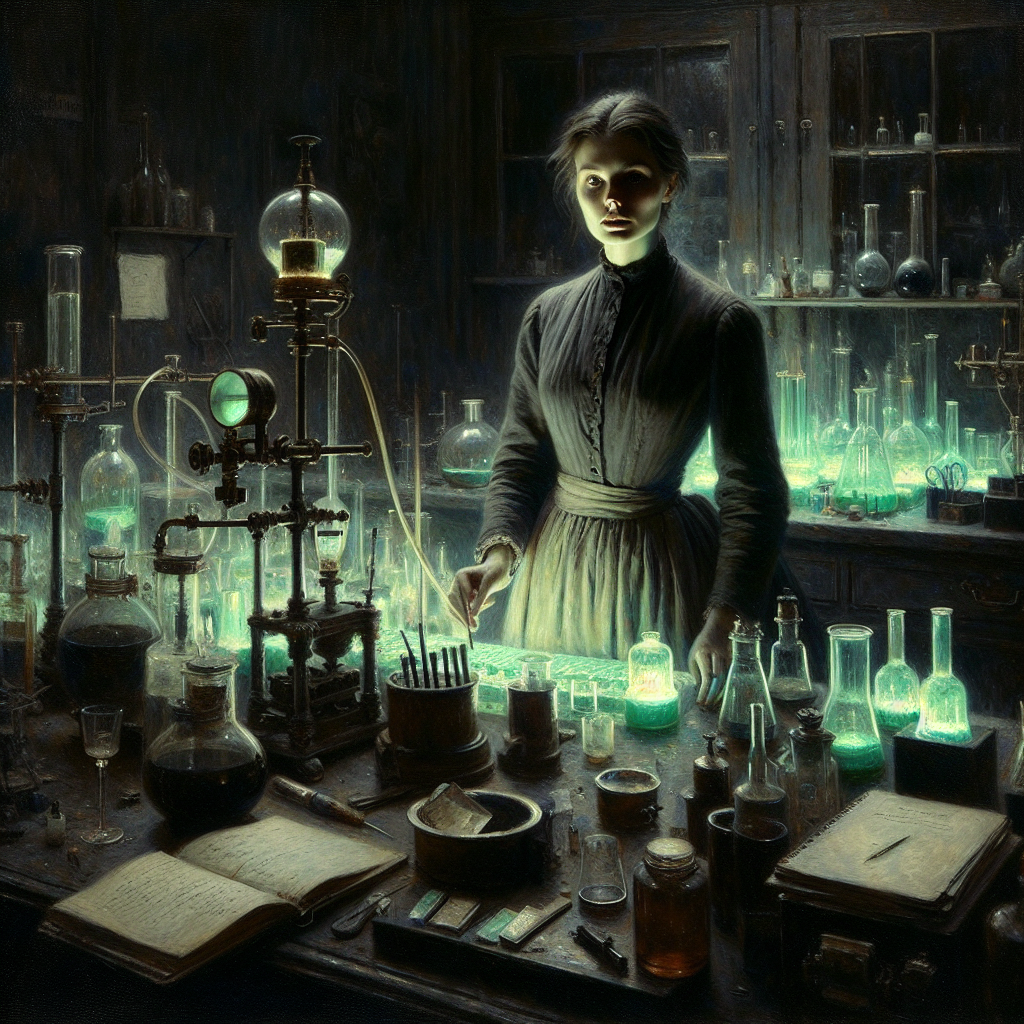
Here is #EuropeanBios thread #78, re-posted cuz I messed up the first one. This is the story of Marie Curie, born 1867. A genius who coined the term "radioactivity" and won 2 Nobel prizes, she spent her life fighting sexists who tried to ignore her existence and erase her work.
-
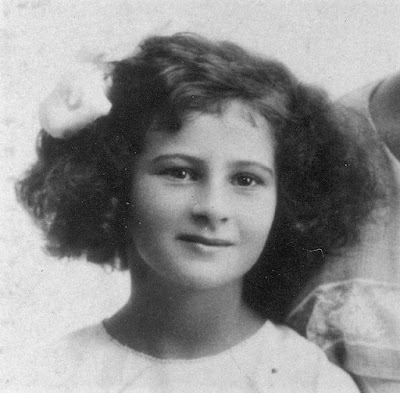
Young Marie Curie (Maria Sklodowska), c. 1880s, public domain public domain -
We start, as we so often do, by expanding her name: she was born Maria Salomea Skłodowska. I was surprised to learn she wasn't French: she was born in Poland and only moved to France in her 20s, where she married Pierre Curie, took his last name, and changed hers to "Marie".
-
Maria's younger years were impoverished; her family was part of minor Polish nobility who had lost their wealth and power but retained a sense of superiority. Her father was a teacher of physics and mathematics, and her mother a headmistress of a boarding school. (Maria is left)
-
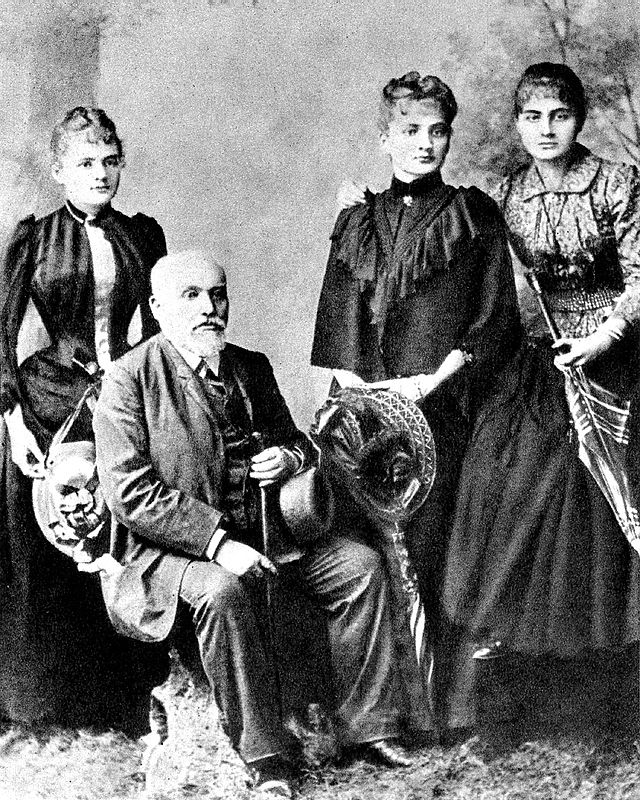
The Sklodowski family: father Władysław and daughters (Maria at left), c. 1890s, public domain public domain -
Maria's mother died of tuberculosis when Maria was only 10 years old, leaving her father a single parent to five children and further tightening their financial circumstances. But her father recognized her intelligence early on and had grand ambitions for her life from the start.
-
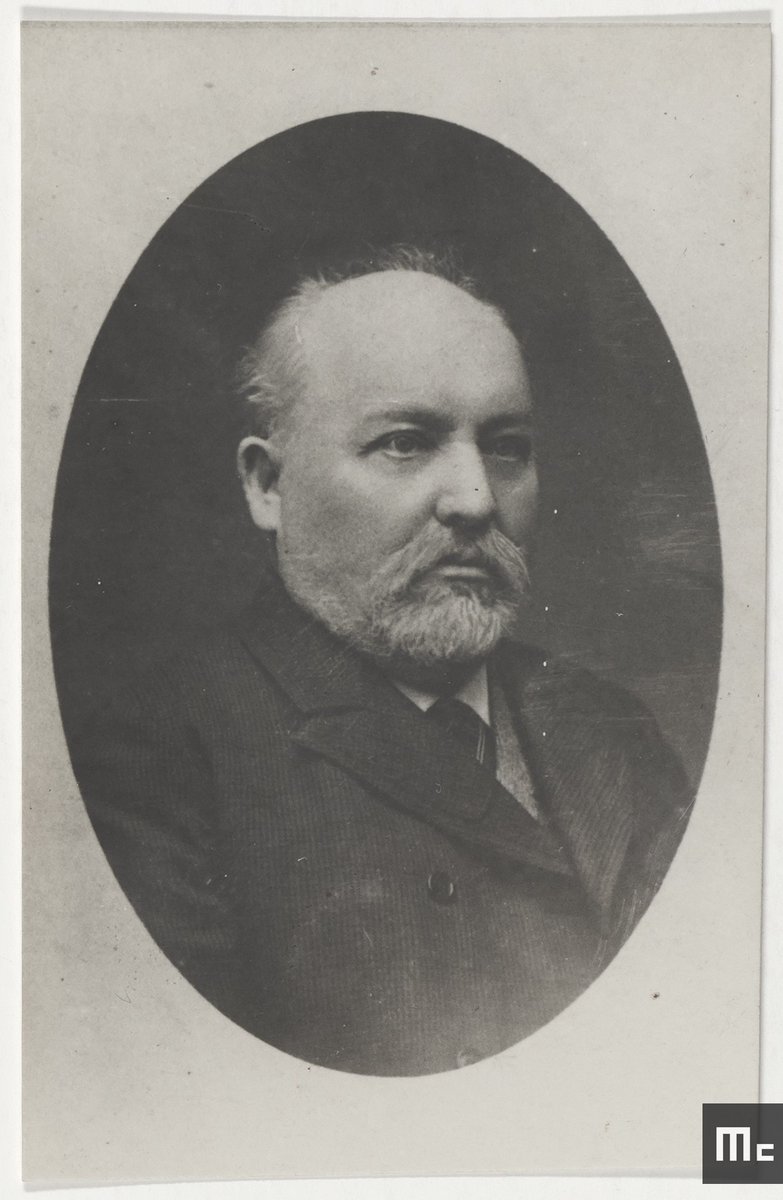
Władysław Skłodowski, father of Marie Curie, c. 1890s, public domain public domain -
Poland at the time had been annexed by Russia, and the Russians were busy trying to stamp out Polish national identity, language, and history. Her father rebelled secretly by keeping the language and history alive in his students.
-
Maria and her sisters were unable under Russian law to attend university, so they became part of a secret organization called the Flying University, which taught Polish history and other subjects in secret and allowed women to enroll. Later, they also taught for the organization.
-
Maria worked as a governess to support her sister Bronisława's education. The job was miserable. She fell in love with the eldest son of the house but his parents strongly disapproved of the match and he eventually fell in line with their wishes, leaving her even more miserable.
-
In her early 20s her family found the money to send her to Paris, where she lived a threadbare existence as a student, although the degree to which she was cold and hungry has been somewhat exaggerated by people including Maria herself telling her story later to raise funding.
-
Her teachers in Paris recognized her talents and awarded her a scholarship, improving her living circumstances. The scholarship paid her to do research work, and while performing this work she met Pierre Curie, whom she would marry a few years later, gaining French citizenship.
-
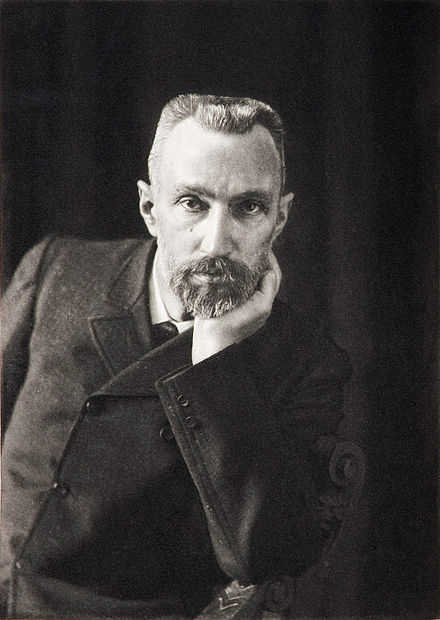
Pierre Curie, physicist and husband of Marie Curie, c. 1900, public domain public domain -
The two of them were both workaholic nerds who ignored domestic concerns and also eating and sleeping to focus on their research, so they were a great match. For their honeymoon, they bought a bicycle and went on an extended cycling tour of France. Yes, they were *those* nerds.
-
In 1895, when Maria was 28, Wilhelm Röntgen discovered that some chemicals emitted a mysterious radiation. Uncertain what they were, he called them "X" rays until he could think of a name. Over his strenuous objections, scientists worldwide decided to call them "X-rays" forever.
-
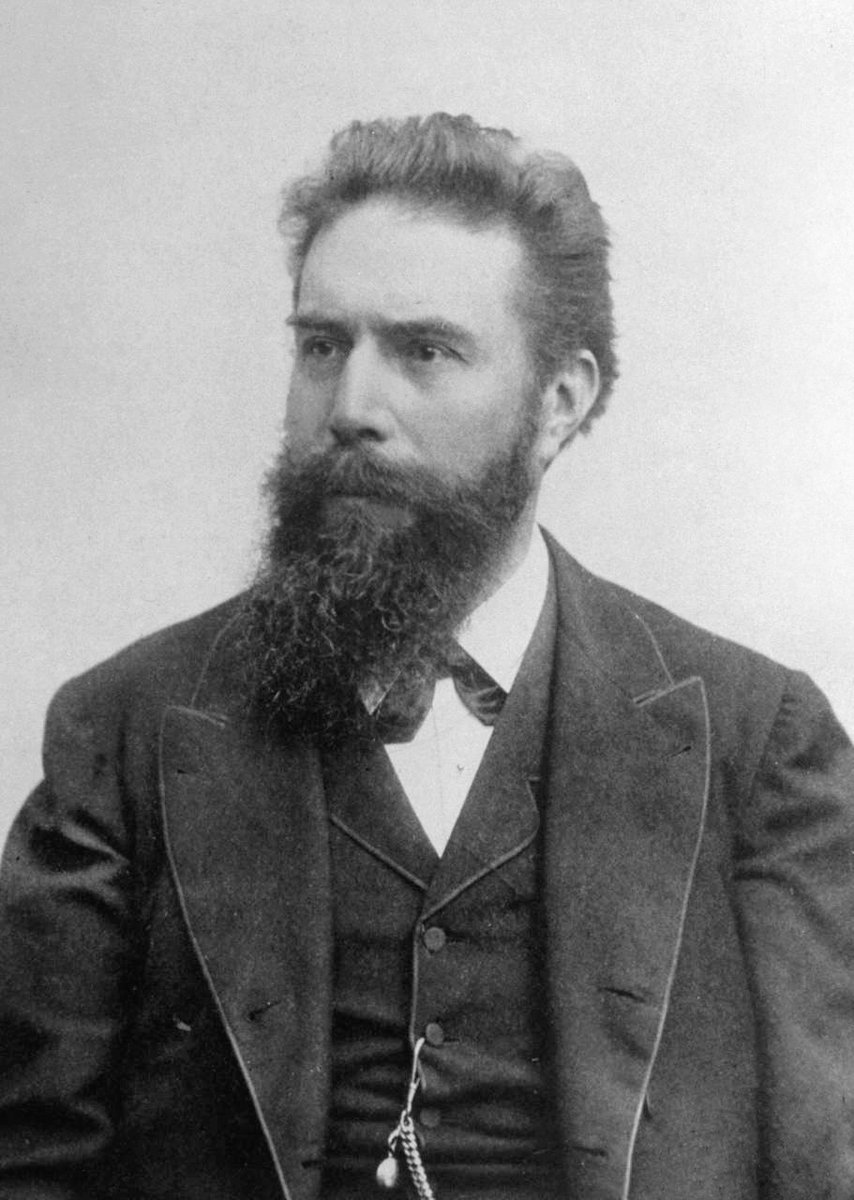
Wilhelm Röntgen, discoverer of X-rays, c. 1895, public domain public domain -
X-rays caused a popular cultural sensation. The idea that you could see through skin to the bones underneath was vaguely understood as the power to see through anything (think: Superman's X-ray vision) and there was a moral panic about the threat to privacy this posed.
-
The public fascination with the power of X-rays and their imagined lewd applications led to one senator proposing to ban them, but also to a great deal of scientific interest in, and therefore funding for, research into related forms of invisible energy rays.
-
Henri Becquerel, a wealthy young man descended from three generations of gentleman scientists, accidentally discovered radiation associated with uranium salts but abandoned the work for lack of practical applications and interest on his part. Maria picked up where he left off.
-
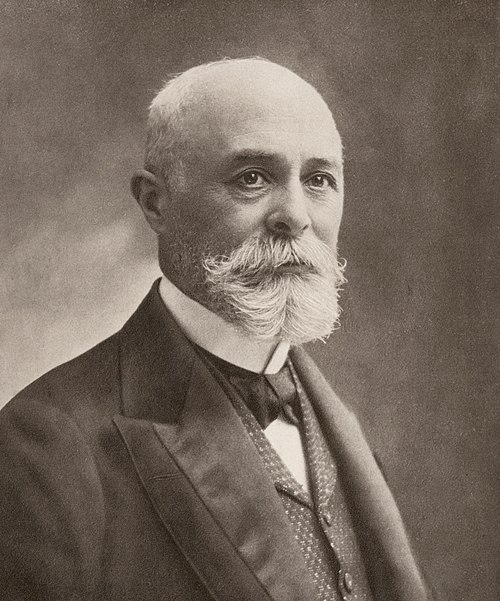
Henri Becquerel, discoverer of radioactivity, c. 1900, public domain public domain -
She worked primarily with a material called pitchblende, which roughly translated means "useless black stuff". She correctly determined there must be some element in pitchblende that was producing radiation, probably uranium, and set out to isolate it.
-
This was very tedious, mechanical work. Tons of pitchblende had to be boiled, crystallized and generally messed with to isolate the source. Her work was assisted by Pierre, who invented new, extremely sensitive electrometers that allowed her to precisely measure energy output.
-
Sexists who later attempted to downplay Maria's contributions pointed to the huge amount of work involved and claimed that she was merely taking care of the mechanical drudgery while the actual discoveries were being made by Pierre, but Pierre himself always credited Maria.
-
In fact for the first few years of Maria's work Pierre Curie was not even involved. He was making separate, worthy discoveries researching the electrical properties of crystals (his electrometers were the result of this work) and he joined in on radiation work only much later.
-
Maria's work to isolate uranium out of pitchblende and thus measure it precisely were successful, but in the process she discovered the material left over when she had separated out the uranium was even more radioactive than before: there was another radioactive element in there.
-
Further work to separate the chemical elements of pitchblende yielded a brand new, highly radioactive element. She named it Polonium, after her native, repressed Poland, in an explicitly political act inspired by the quiet, intellectual rebelliousness of her father.
-
While all this was going on she was making great strides in the theory of how all of this worked as well. The idea of subatomic particles was brand new, and her work helped confirm it. She also proved that Thorium was radioactive.
-
But there was still one more element in pitchblende, thousands of times more radioactive than the others: radium. It was present only in tiny quantities and it was chemically much harder to isolate. Proving it was there became an obsession for Maria and Pierre alike.
-
The search for radium was laborious and expensive. Tons upon tons of pitchblende had to be processed, which required funding. A lot of the Curies' effort went into selling radioactively-enriched distillates of pitchblende to other interested scientists to fund their work.
-
Meanwhile, sexist resistance to Marie herself continued. Although they were both professors, Pierre was called "Professor Curie" and Marie always "Madame Curie". As they gained prestige, Pierre received dozens of lucrative job offers, while Marie did not.
-
By 1898, they had managed to isolate tiny quantities of radium, less than a gram, which was nevertheless so radioactive that it emitted enough energy to boil a liter of water in an hour. They published their findings and began to attract the notice of the scientific community.
-
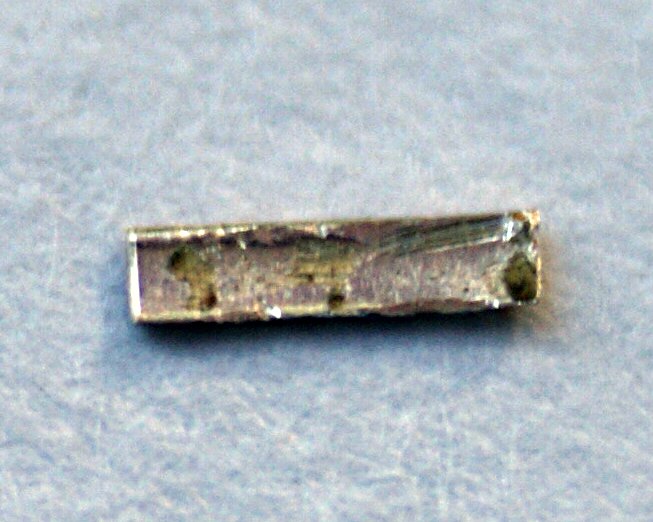
Sample of radium chloride crystals, early 20th century, public domain public domain -
In 1903, the nobel prize for physics was to be awarded jointly to Becquerel and Pierre Curie for the discovery of radioactivity (specifically, that it was emitted from the atom). At Pierre's insistence, Maria's name was added to the prize, making her the first woman to win one.
-
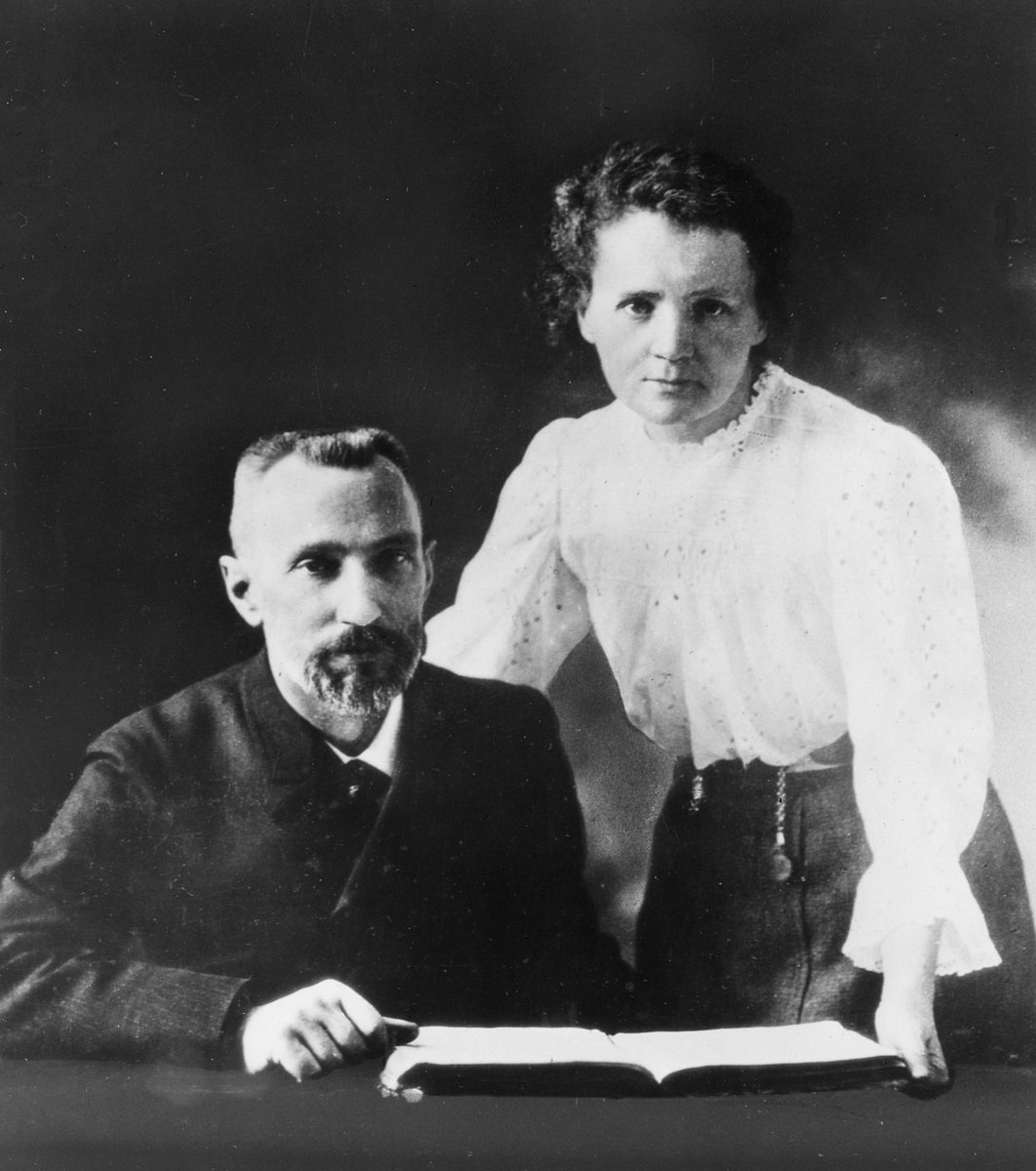
Pierre and Marie Curie in their laboratory, c. 1903, public domain public domain -
Being the first woman to win a Nobel prize is of course an accomplishment, but the Nobel prize had only been started in 1901 and had nothing like the status then that it does now, so Maria's win attracted less fame than you might have imagined; nobody had heard of Nobel prizes.
-
During all this work, the effects of radiation on the human body were entirely unknown. Pierre and Maria were constantly bathed in radiation. They kept a glowing vial of enriched pitchblende in their bedroom. Their fingers were burned and cracked from radiation exposure.
-
Pierre was the first to feel the ill effects of exposure. In addition to burns on his hands, he complained constantly of bone pain (a dead giveaway of radioactive exposure). Which is why you're going to be surprised to learn that he died in 1906 by getting run over by a truck.
-
...what? Really? All that foreshadowing with the radiation and the sweating over vats of radioactive shit and the burn marks and stuff and he gets hit by a TRUCK? Actually it was a horse-drawn cart, but yes, he died of a crushed skull, leaving Maria and their two children behind.
-
Maria, it has to be admitted, was never exactly mom of the year. Obsessed with her work, emotionally damaged by the loss of her own mother and a childhood of hiding her rebellious Polish nationalism from Russians, she had always suffered from spells of depression.
-
But Pierre's death took this to new heights. They had been inseparable, and deeply in love, and Maria was grief stricken. She tried to avoid the pain by working to the point of exhaustion and then collapsing. To her daughters, she became emotionally almost totally unavailable.
-
Her older daughter Irene took after her parents and after Pierre's death became Maria's primary scientific assistant, which brought them closer together. But her second daughter Eve was more interested in fashion and poetry and was cruelly ignored by her deeply nerdy mother.
-
In the years after Pierre's death, the discovery of radiation and radium particularly snowballed from curiosity into public fascination and finally to a worldwide mania that it is very hard to imagine now. Nobody knew what radium could do, so they decided it could do anything.
-
You have probably heard that they put radium into glowing numbers for watch faces. But they put it into everything: drinks, food, cosmetics, shampoo. They wove it into clothing. It was touted as a cure for alcoholism, infertility, for cancer. They put it in fertilizer.
-
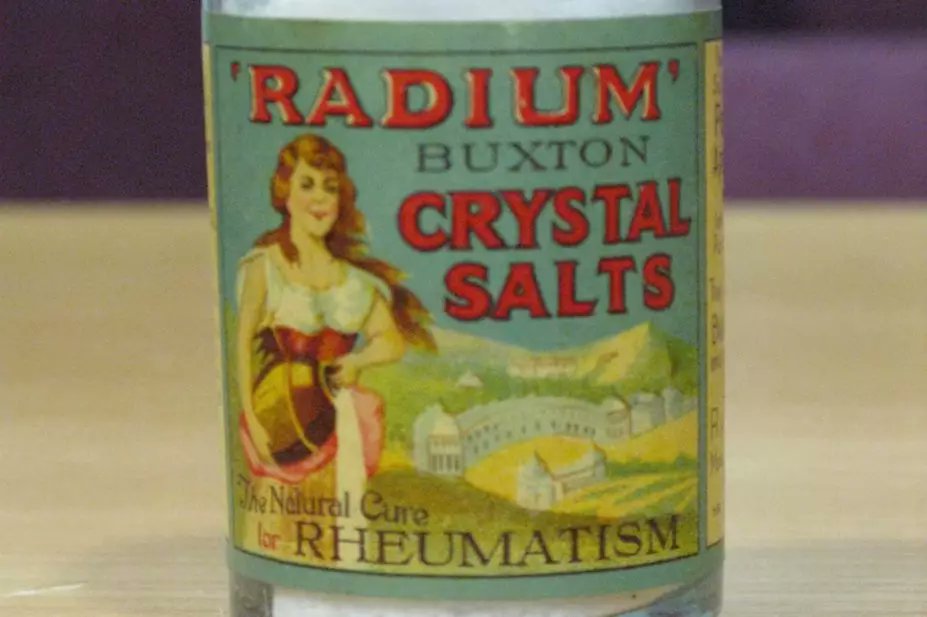
"Radium" Buxton Crystal Salts bottle, early 20th century radium health product, public domain public domain -
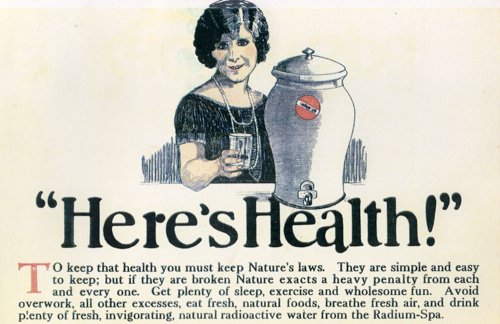
"Here's Health!" advertisement for Radium-Spa water, early 20th century, public domain public domain -
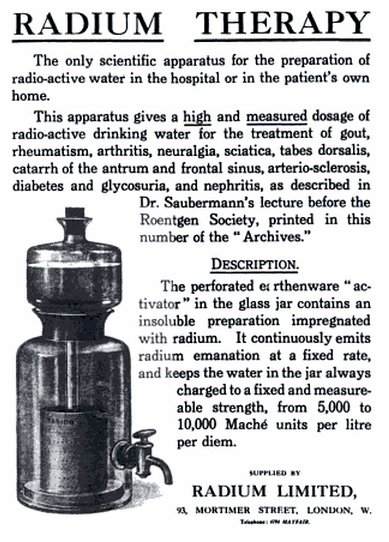
Radium Therapy advertisement by Radium Limited, London, early 20th century, public domain public domain -
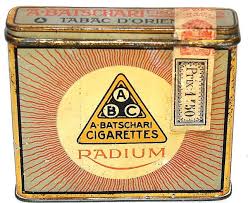
A-Batschari Radium cigarettes tin, early 20th century, public domain public domain -
The only thing that prevented this being a disastrous worldwide cancer event is that radium was very, very expensive, so all of these products contained very little radium. Marie personally tested the fertilizer and discovered it had almost no radium at all, and thank goodness.
-
Still, you have probably heard of the famous case of the women whose job it was to paint radium onto the dials of the watches -- they all got cancer of the jaw from licking the brushes. Marie herself had her immune system destroyed by radiation affecting her bone marrow.
-
Despite her declining health, now assisted by her daughter Irene, Maria continued her work, focusing less on the theoretical basis of radiation than on its practical applications in technology and industry. Sexists have tried to paint this as weakness in her theoretical work.
-
In 1911, Maria was awarded the Nobel prize for chemistry, this time by herself, for her work isolating Polonium. She is one of only two people to have ever won two Nobel prizes in different fields. A unit of measurement of radiation, the Curie, was named after her.
-
All this accomplishment had turned into fame. Newspapers began to cover everything she did, and always looking for more funding for her work, she began to lean into her own celebrity as a way of raising donations to fund her laboratory.
-
But the cost of fame came home to Maria in 1911, when the press discovered that she had had an affair with Paul Langevin, a former student of her husband's who worked with her. Langevin was married, but estranged from his wife. The press worked it up into a huge scandal.
-
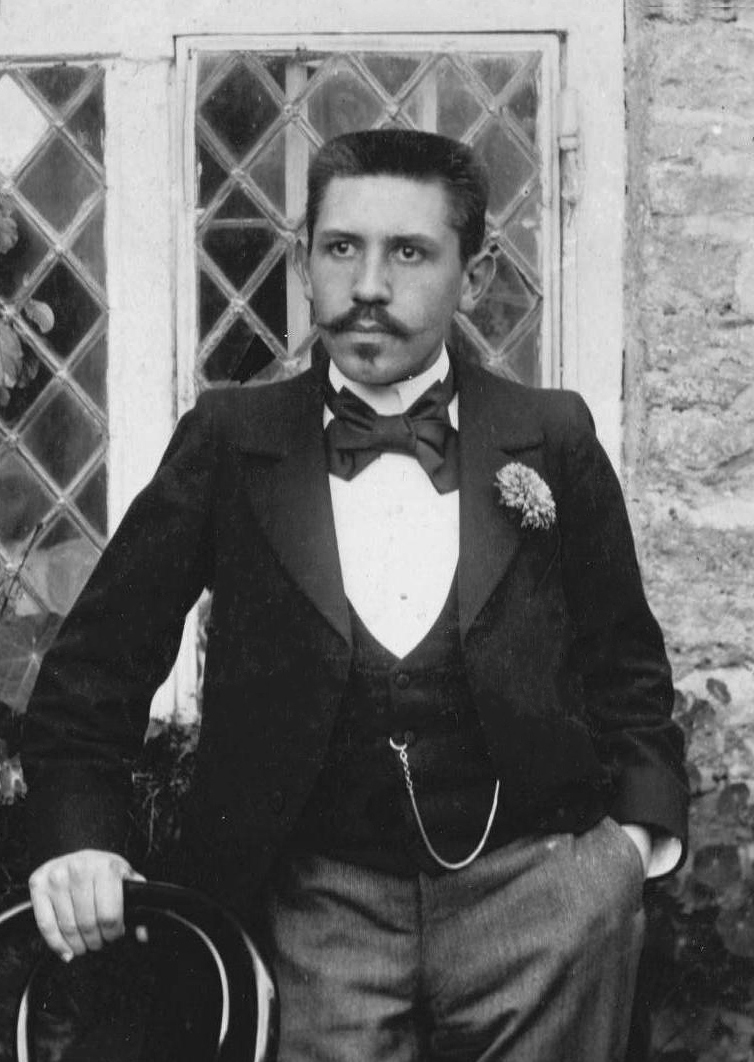
Paul Langevin, French physicist, c. 1900s, public domain public domain -
The news actually broke while she was at a scientific conference, the now famous Solvay Conference. Here's a picture of her at the conference, the only woman present. Even more awkwardly, Langevin himself was there too, at the far right. She fled home mid-conference.
-
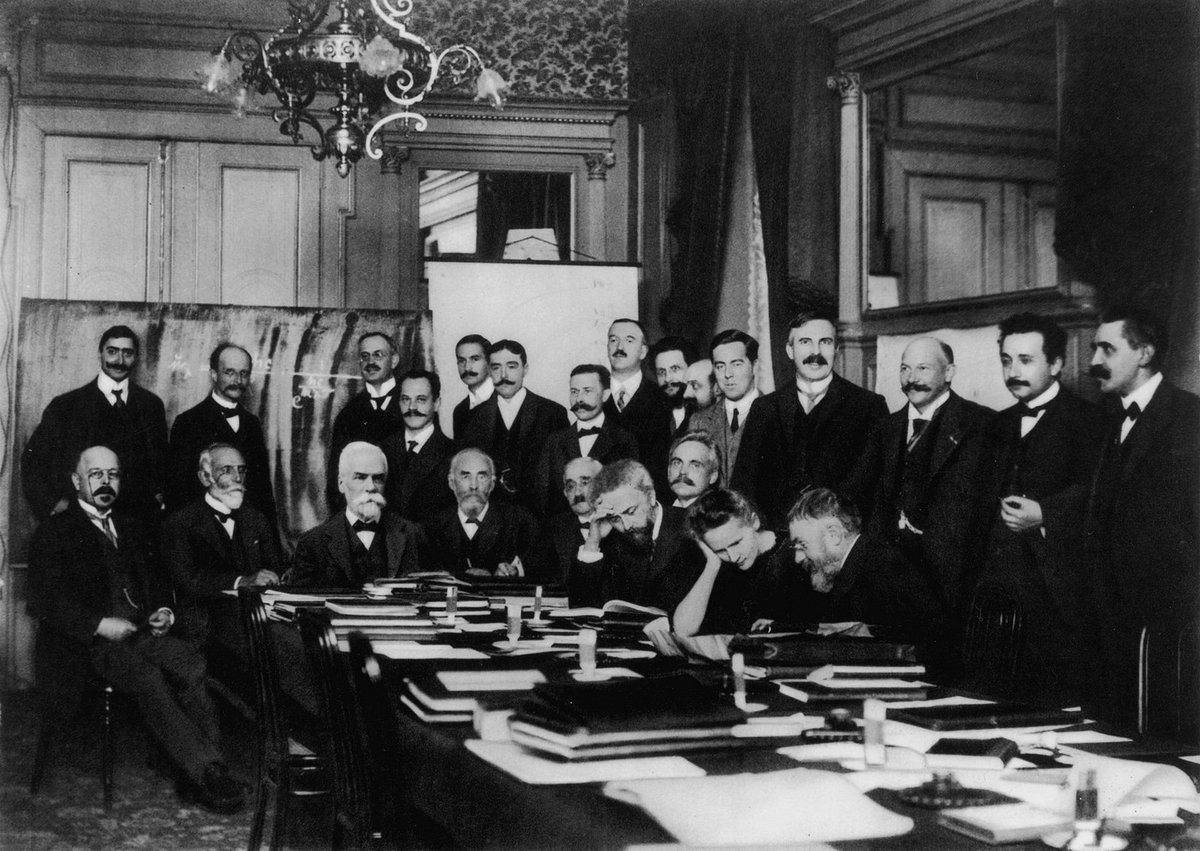
First Solvay Conference, Brussels, 1911 — Marie Curie is the only woman present, public domain public domain -
It's wild to imagine, but in 1911 Marie Curie was considered a ruined woman. People threw stones at her house and made anti-semitic remarks. Some people even demanded that she be deported from France back to Poland. (Langevin suffered no consequences and had several more affairs)
-
The scandal was such that she was asked not to show up to the ceremony for her second Nobel prize, but did anyway. The French Academy of Sciences voted against admitting her (and in fact did not admit any women until the early 1960s).
-
Then the first World War broke out. Aware of the potential for radioactive weapons, Maria fled Paris ahead of the Germans with her supply of radium in an (inadequately shielded) lead-lined suitcase. With it safely hidden, she returned to volunteer in war efforts.
-
Maria spent the war applying her considerable expertise in developing and then personally operating mobile x-ray units, alongside her daughter Irene. Able to find embedded shrapnel without traumatic probing of the wound, her work saved hundred of lives over the course of the war.
-
By the 20s her scandal had been mostly forgotten and she was once again a famous scientist. She visited America, where she was presented with 1 gram of radium to continue her research by Warren G Harding, the result of a widely popular public fundraising campaign.
-
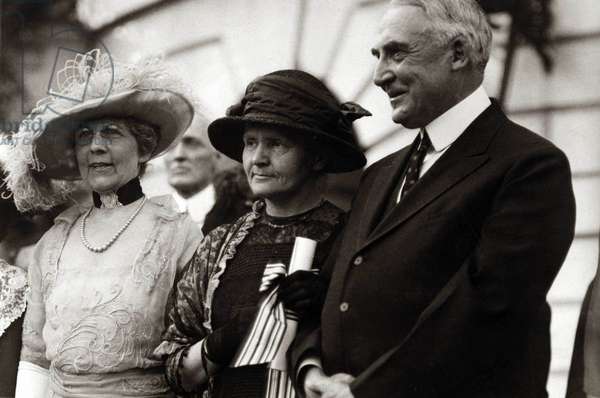
Marie Curie receiving radium from US President Warren G. Harding, 1921, public domain public domain -
In order to keep raising the considerable funds necessary to support her work she maintained an image as impoverished scientist, but in fact by this time she was personally fairly well off. She was the co-owner of several apartment buildings in Paris and other property.
-
She died in 1934, aged 66, from aplastic anaemia caused by radiation wrecking her bone marrow. In 1995, her remains were moved to the Pantheon in Paris to honor her, although they had to be sealed in a lead-lined container as they were still radioactive.
-
Her posthumous lionization by the French government is a little rich given that during her life they routinely refused to fund her work, denied her entry into the scientific establishment, and entertained calls to deport her. But late is better than never, I guess.
-
Marie Curie's legacy was far from secure for many decades after her death. Sexists worldwide tried to rewrite history, making her at best co-worker and at worst assistant to Pierre rather than, as everyone who was present at the time attests, the other way around.
-
But these days everyone agrees: through hard work, experimentation, and flashes of insight, she changed our understanding of matter itself. Her work would join with those of dozens of others to eventually culminate in humanity's most terrifying invention, the atomic bomb.
-
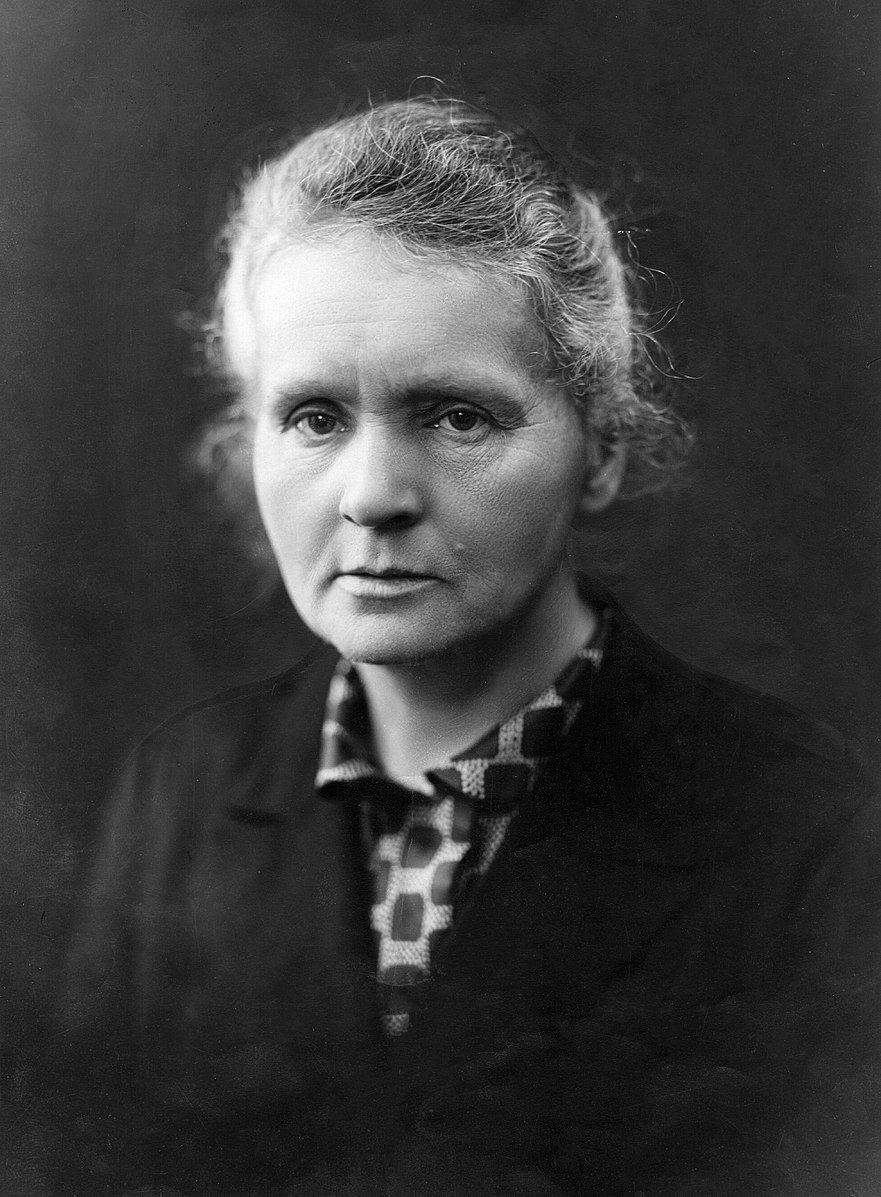
Portrait of Marie Curie in later life, c. 1920s, public domain public domain
- Previously: Beatrix Potter
- Next: Rasputin
- Full list
Text and images copyright © 2020-2023 Laurie Voss
except where indicated
except where indicated